A health policy, then a habit.
In the 1950s, Swedish dental health was alarming. The government, in collaboration with the Medical Board, ran a series of (now infamous) experiments and concluded that frequent sugar exposure was the culprit, not sugar itself. The official recommendation was simple: if children ate candy, they should eat it once a week, all at once.
Saturday became the chosen day. Lördagsgodis, Saturday candy, was born as official policy and quietly grew into a national ritual.
"It was the only day candy was allowed in our house. We waited for it. We talked about it on the way to the shop."
The candy wall.
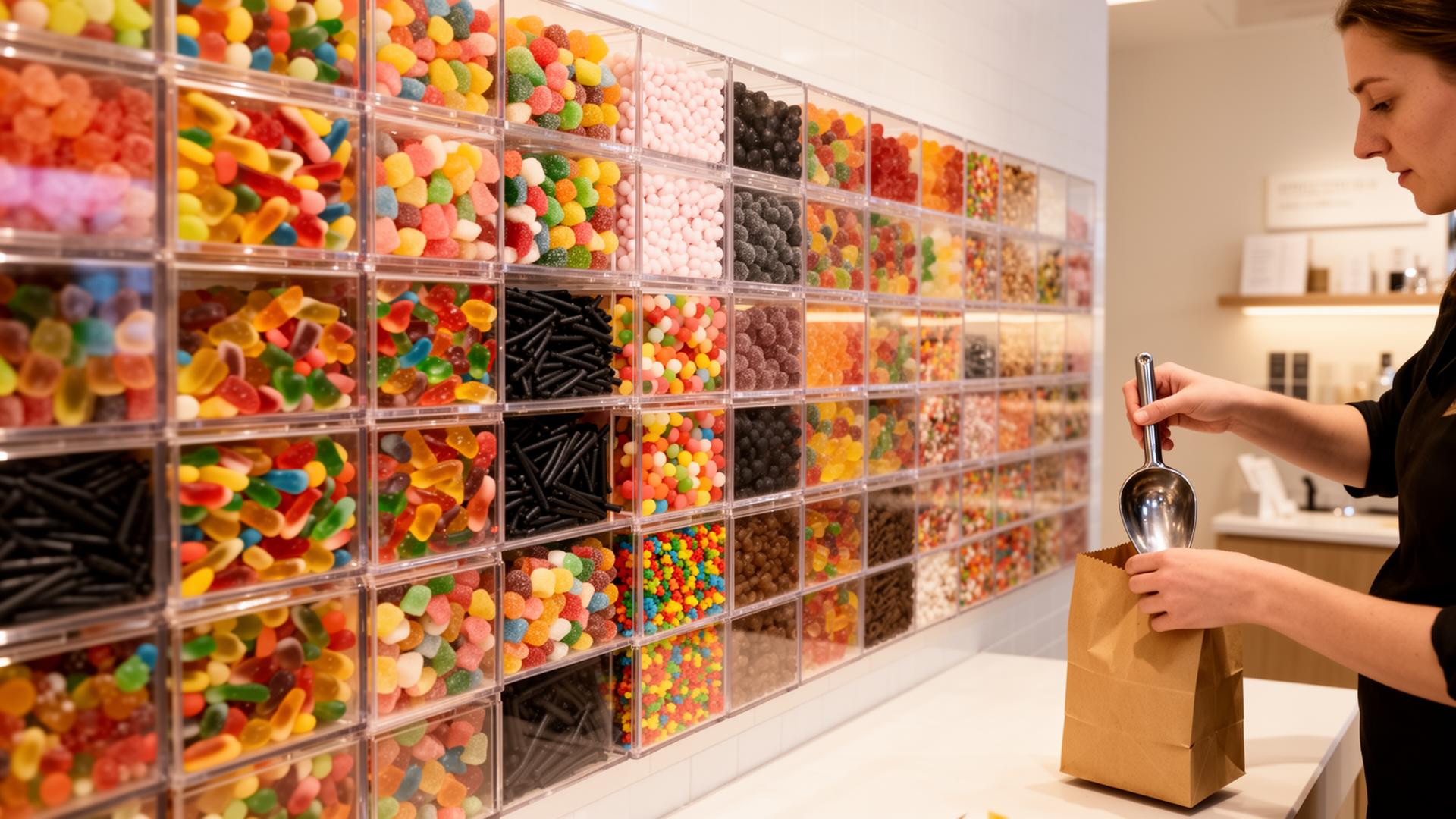
Walk into any Swedish supermarket, kiosk, or dedicated godisaffär on a Saturday afternoon and you'll find the godisvägg, the candy wall. Thirty to forty clear bins, each with a metal scoop, filled with lösgodis: gummies, foams, sour skulls, marzipan, chocolate-covered everything.
You take a small kraft paper bag. You walk the wall slowly. The kids choose first. The average bag weighs between half a kilo and a full kilo (a pound to two pounds). You weigh it at the register. You go home.
Why the candy is different.
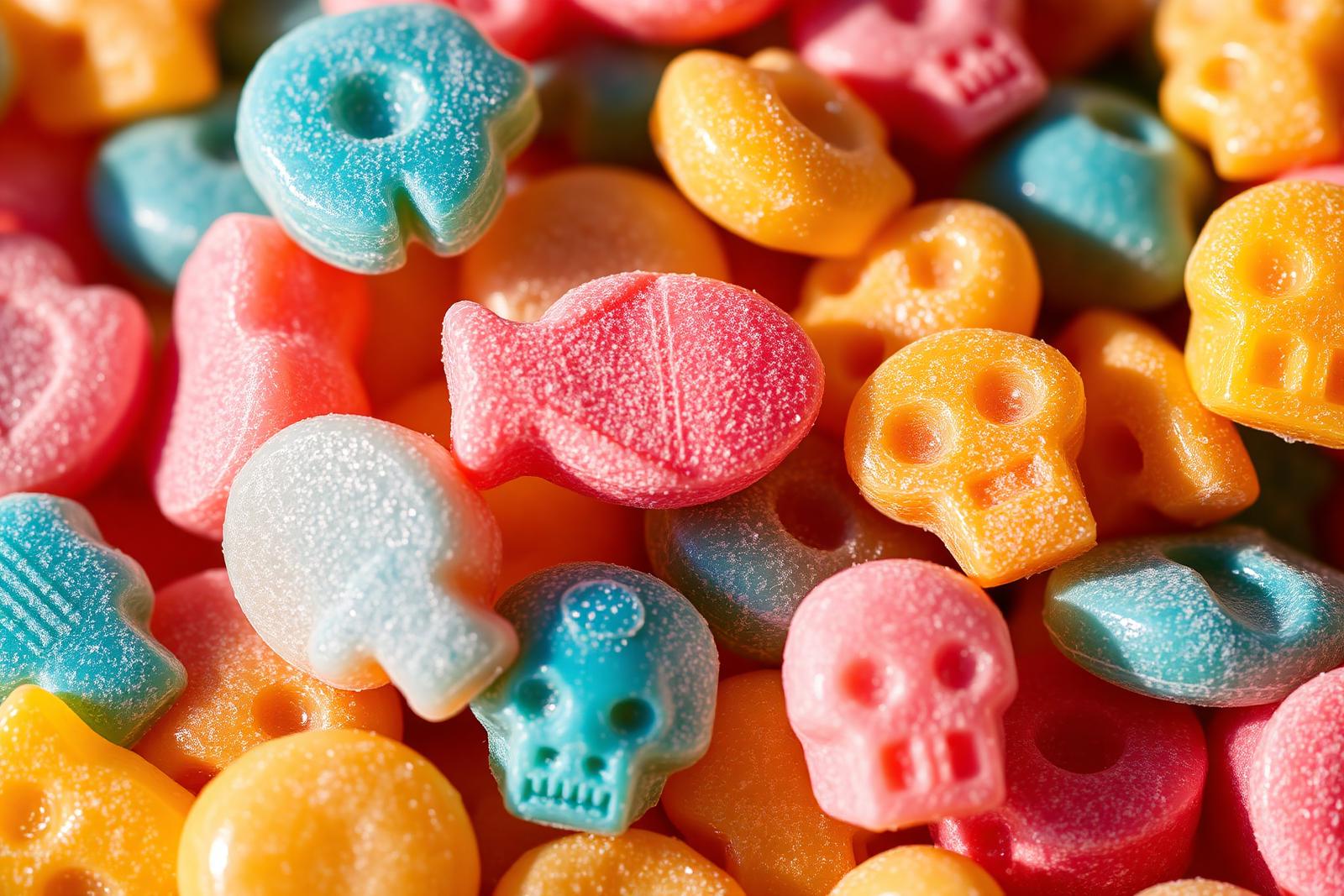
Because Sweden eats so much of it, the candy itself evolved differently. Flavors are bolder, raspberry meets sour in the same skull-shaped piece. Textures vary widely: light marshmallow foams, firm sour-coated ovals, chewy gelatin classics. Real fruit purees, natural colors from paprika and beet, and a level of craft most Americans have never tasted.
A pound, every Saturday.
That's the rhythm. About a pound, once a week, shared on the couch with whoever you live with. Not indulgence, ritual. Slowness, in a country that prizes both.
We brought the wall to the web.